9 Home Remedies for Headache Relief That Work Fast
Medical Disclaimer: This article is for educational and informational purposes only. If you experience severe, sudden, or persistent headaches, please consult a healthcare professional. Do not use this content as a substitute for medical advice or diagnosis.
Headaches are one of the most common health complaints in the world, and most people reach for over-the-counter pain relief as their first response. That works well in many situations, but there are also a number of effective home remedies for headache relief that address the underlying causes rather than just masking the pain. Whether your headaches are triggered by tension, dehydration, poor sleep, or stress, the approaches below can make a real difference when applied consistently and correctly.
Drink Water Immediately
Dehydration is one of the most underappreciated causes of headaches. When the body is low on fluids, the brain can temporarily shrink slightly as it loses moisture, pulling away from the skull and triggering pain signals. This type of headache typically develops over several hours and is often accompanied by fatigue, difficulty concentrating, and reduced urine output.
The fix is straightforward. Drinking a large glass of water at the first sign of a headache, followed by continued hydration over the next hour, resolves dehydration headaches relatively quickly. Many people find that their headache improves within thirty to sixty minutes of drinking enough water. Preventing this type of headache entirely is simply a matter of staying consistently hydrated throughout the day.
Apply a Cold or Warm Compress
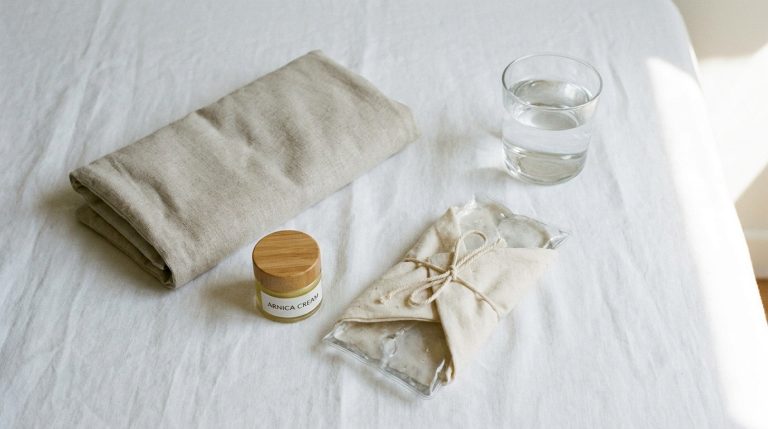
Temperature therapy is one of the oldest and most reliably effective headache remedies. Cold compresses work particularly well for migraines and throbbing headaches because cold constricts blood vessels and reduces inflammation, which dulls the pain signals being sent to the brain. A bag of frozen peas wrapped in a thin towel, applied to the forehead or the back of the neck for fifteen to twenty minutes, can provide meaningful relief.
Warm compresses work better for tension headaches, where tight muscles in the neck, shoulders, and scalp are the primary culprit. Applying a warm towel or heating pad to the back of the neck and upper shoulders relaxes those muscles and reduces the referred pain that travels up into the head. Experimenting with both temperatures helps you identify which type of headache you are dealing with and which remedy suits it best.
Try Peppermint Oil
Peppermint essential oil contains menthol, which has a well-documented cooling and analgesic effect on the skin and underlying tissues. Applying diluted peppermint oil to the temples and forehead has been studied as a headache remedy and found to be genuinely effective for tension-type headaches, in some comparisons performing similarly to acetaminophen.
To use it safely, dilute a few drops of peppermint essential oil in a carrier oil such as coconut or almond oil before applying it to the skin. Undiluted essential oils can cause irritation. Apply it to the temples, forehead, and the back of the neck, then massage gently in circular motions. The cooling sensation begins within a few minutes and the headache-relieving effect tends to follow.
Rest in a Dark, Quiet Room
Light and sound sensitivity are common features of both migraines and severe tension headaches. Continuing to expose yourself to screens, bright lighting, and background noise when you have a headache makes it worse and prolongs recovery. Removing those stimuli gives the nervous system a chance to settle.
Lying down in a darkened, quiet room with your eyes closed for twenty to thirty minutes is not just passive rest. It actively reduces the sensory load on an already overstimulated nervous system. If you can sleep, even briefly, that is even better. Sleep is one of the body’s most powerful headache resolution mechanisms, particularly for migraines.
Massage Your Scalp and Neck
Tension headaches, which are the most common type, originate in tight muscles around the head, neck, and shoulders. Massaging these areas directly addresses the source of the pain rather than simply trying to suppress the symptoms.
Using your fingertips, apply firm but gentle circular pressure to the temples, the base of the skull where it meets the neck, and across the top of the shoulders. Spending two to three minutes on each area while breathing slowly and deliberately helps the muscles release. Having someone else do this for you is even more effective because you can fully relax rather than dividing your attention between the massage and the pain.
Consume Ginger
Ginger has anti-inflammatory and analgesic properties that make it useful for headache relief, particularly for migraines. It works in part by blocking prostaglandins, the compounds that promote inflammation and pain signaling. Several studies have compared ginger supplementation to sumatriptan, a prescription migraine medication, and found comparable results for moderate migraine attacks.
The simplest way to use ginger for headaches is to make fresh ginger tea by steeping a few slices of peeled ginger root in hot water for ten minutes, then adding honey and lemon to taste. Ginger supplements in capsule form are another option. Either way, taking it early in the headache, at the first sign of symptoms, gives it the best chance to be effective.
Reduce Caffeine Carefully
Caffeine has a paradoxical relationship with headaches. In moderate amounts, it can actually help relieve headache pain, which is why it is included in many over-the-counter pain relief products. It works by constricting dilated blood vessels, which is one mechanism behind vascular headaches.
However, caffeine withdrawal is also a very common headache trigger. People who consume caffeine regularly and then skip their usual morning coffee often develop a dull, persistent headache within a few hours. If this sounds familiar, the remedy is straightforward: consume a moderate amount of caffeine and then work on gradually reducing your overall dependence over time to prevent the withdrawal cycle from recurring.
Practice Deep Breathing
Stress and muscle tension are among the most common headache triggers, and both respond to controlled breathing exercises. When you breathe slowly and deeply using the diaphragm rather than the chest, you activate the parasympathetic nervous system, which counteracts the stress response and promotes muscle relaxation throughout the body.
A simple technique is to inhale slowly for four counts, hold for four counts, and exhale for six counts, repeating this cycle for five to ten minutes. Doing this at the first sign of a tension or stress headache can prevent it from escalating. Practiced regularly as a daily habit, deep breathing reduces the overall frequency of stress-triggered headaches over time.
Get Better Sleep Consistently
Poor sleep is both a trigger and a consequence of headaches. People who sleep irregularly, too little, or too much are all at higher risk of frequent headaches. The relationship is circular: headaches disrupt sleep, and poor sleep causes more headaches.
Breaking this cycle requires addressing sleep hygiene directly. Going to bed at the same time each night, avoiding screens for an hour before sleep, keeping the bedroom cool and dark, and limiting alcohol and heavy meals in the evening all contribute to deeper and more restorative sleep. Over several weeks of consistent improvement in sleep quality, most people notice a significant reduction in headache frequency and severity.
Final Thoughts
Most headaches respond well to these home remedies for headache relief when the right approach is matched to the right type of headache. The key is paying attention to your patterns, identifying your triggers, and being consistent with the remedies that work for you. If your headaches are frequent, severe, or changing in character, always consult a healthcare professional to rule out underlying causes.