8 Home Remedies for Better Sleep You Can Start Tonight
Medical Disclaimer: This content is for educational purposes only and does not constitute medical advice. If you are experiencing chronic insomnia or a sleep disorder, please speak with a qualified healthcare provider.
Good sleep is one of the foundations of physical and mental health, yet a significant portion of the population struggles to get enough of it. The effects of poor sleep accumulate over time, affecting mood, memory, immune function, metabolism, and cardiovascular health. Before reaching for sleep aids, many people find that targeted changes to their environment, habits, and evening routine make a dramatic difference. These home remedies for better sleep address the root causes of sleep difficulty rather than simply sedating the nervous system.
Create a Consistent Sleep Schedule
The human body runs on a circadian rhythm, an internal biological clock that regulates the timing of sleep and wakefulness over a roughly twenty-four-hour cycle. This clock is sensitive to consistency. When you go to bed and wake up at the same time every day, including weekends, your body learns to anticipate sleep and begins preparing for it naturally, releasing melatonin earlier in the evening and reducing cortisol at the right time.
Irregular sleep schedules confuse this system. Staying up late on weekends and sleeping in causes what researchers call social jetlag, a misalignment between the biological clock and actual sleep timing that produces many of the same negative effects as shift work. Committing to a consistent sleep and wake time is one of the single most effective changes you can make for sleep quality, and it costs nothing.
Drink Chamomile Tea Before Bed
Chamomile has been used as a sleep aid for centuries, and modern research has begun to explain why. It contains apigenin, a compound that binds to receptors in the brain associated with relaxation and sedation. Several clinical studies have found that chamomile extract improved sleep quality and reduced nighttime waking in both healthy adults and people with diagnosed insomnia.
Drinking a cup of chamomile tea forty-five minutes to an hour before bed creates a gentle calming effect without the grogginess associated with pharmaceutical sleep aids. The ritual of making and drinking warm tea also helps signal to the brain that sleep is approaching, which supports the natural wind-down process. Avoid adding sugar, which can interfere with blood sugar stability during sleep.
Reduce Blue Light Exposure in the Evening
Exposure to blue light, the type emitted by smartphone screens, computer monitors, and LED lighting, suppresses melatonin production in the evening. Melatonin is the hormone that signals to the body that it is time to sleep, and disrupting its release delays sleep onset and reduces overall sleep quality.
The simplest fix is to stop using screens for at least an hour before your intended bedtime. If that is not practical, blue light filtering glasses or the built-in night mode settings on most devices reduce the impact significantly. Switching to warm, dim lighting in the evening hours rather than bright overhead lighting also helps preserve the natural melatonin rise that precedes sleep.
Cool Down Your Bedroom
Core body temperature drops naturally in the lead-up to sleep, and this temperature drop is part of the signal that initiates sleep. A bedroom that is too warm interferes with this process, making it harder to fall asleep and causing more nighttime waking. Research consistently finds that people sleep better in cooler environments, with an optimal bedroom temperature generally cited as somewhere between 60 and 67 degrees Fahrenheit.
If air conditioning is not available, a fan directed at the bed, lightweight breathable bedding, and keeping windows open in the evening can help lower the ambient temperature. Taking a warm shower or bath about an hour before bed also works counterintuitively because the subsequent rapid cooling of the body after leaving the warm water mimics the natural pre-sleep temperature drop.
Try Magnesium
Magnesium is a mineral involved in hundreds of biochemical processes in the body, including those that regulate the nervous system and muscle relaxation. Low magnesium levels are associated with difficulty sleeping, nighttime leg cramps, and restlessness. Many people are mildly deficient in magnesium without knowing it, partly because modern agricultural practices have reduced magnesium content in many foods.
Taking a magnesium supplement in the evening, particularly magnesium glycinate or magnesium threonate which are better absorbed forms, has been shown in several studies to improve sleep onset time, sleep duration, and overall sleep quality. Food sources of magnesium include dark leafy greens, pumpkin seeds, almonds, and dark chocolate. Whether through food or supplementation, ensuring adequate magnesium intake is one of the more straightforward sleep interventions available.
Use Lavender Aromatherapy
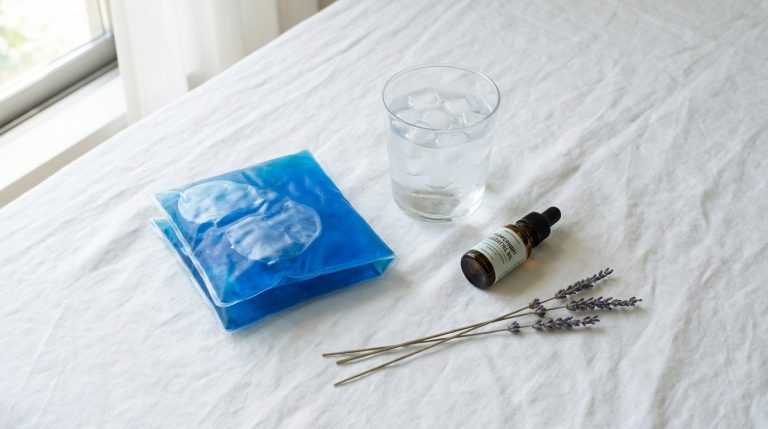
Lavender has a well-established reputation as a calming herb, and it is backed by more research than many people realize. Studies have found that inhaling lavender essential oil before sleep improved sleep quality, increased slow-wave sleep, and reduced nighttime waking in healthy volunteers. The proposed mechanism involves lavender’s effect on the autonomic nervous system, specifically its ability to promote parasympathetic activity.
Using lavender for sleep does not require anything complicated. A few drops of lavender essential oil on a pillow, in a bedside diffuser, or in a warm bath taken before bed provides enough exposure to produce a noticeable calming effect. The scent should be pleasant and not overwhelming, so starting with a small amount and adjusting from there is the right approach.
Limit Alcohol Before Bed
Many people believe that alcohol helps them sleep because it produces initial drowsiness and helps them fall asleep faster. This is true in the short term. What alcohol also does, however, is significantly disrupt sleep architecture in the second half of the night. It suppresses REM sleep, the stage associated with memory consolidation and emotional processing, and causes more frequent nighttime waking as the body metabolizes it.
The result is that drinking before bed typically leaves people feeling less rested than if they had not drunk at all, even if they technically slept the same number of hours. Cutting out alcohol within three to four hours of bedtime allows the body to begin sleep naturally without the disruption that follows alcohol metabolism.
Write Down Your Worries Before Bed
One of the most common reasons people lie awake at night is an active, worried mind that keeps replaying problems, to-do lists, and unresolved concerns. This mental activity keeps the nervous system in a state of alert that is incompatible with sleep onset.
Research has found that spending five minutes writing down your worries and concerns before bed, essentially offloading them onto paper, reduces the mental burden that would otherwise keep you awake. A related technique is writing a to-do list for the following day. This signals to the brain that the tasks have been acknowledged and stored somewhere safe, reducing the need to keep cycling through them mentally during the night.
Final Thoughts
Sleep is not a passive activity. It is an active, restorative process that the body and brain need to function properly. These home remedies for better sleep work because they support the biological systems that govern sleep rather than overriding them. Start with the changes that feel most manageable, maintain them consistently, and give your body two to three weeks to respond before evaluating the results. Quality sleep changes everything else about how you feel and function during the day.